
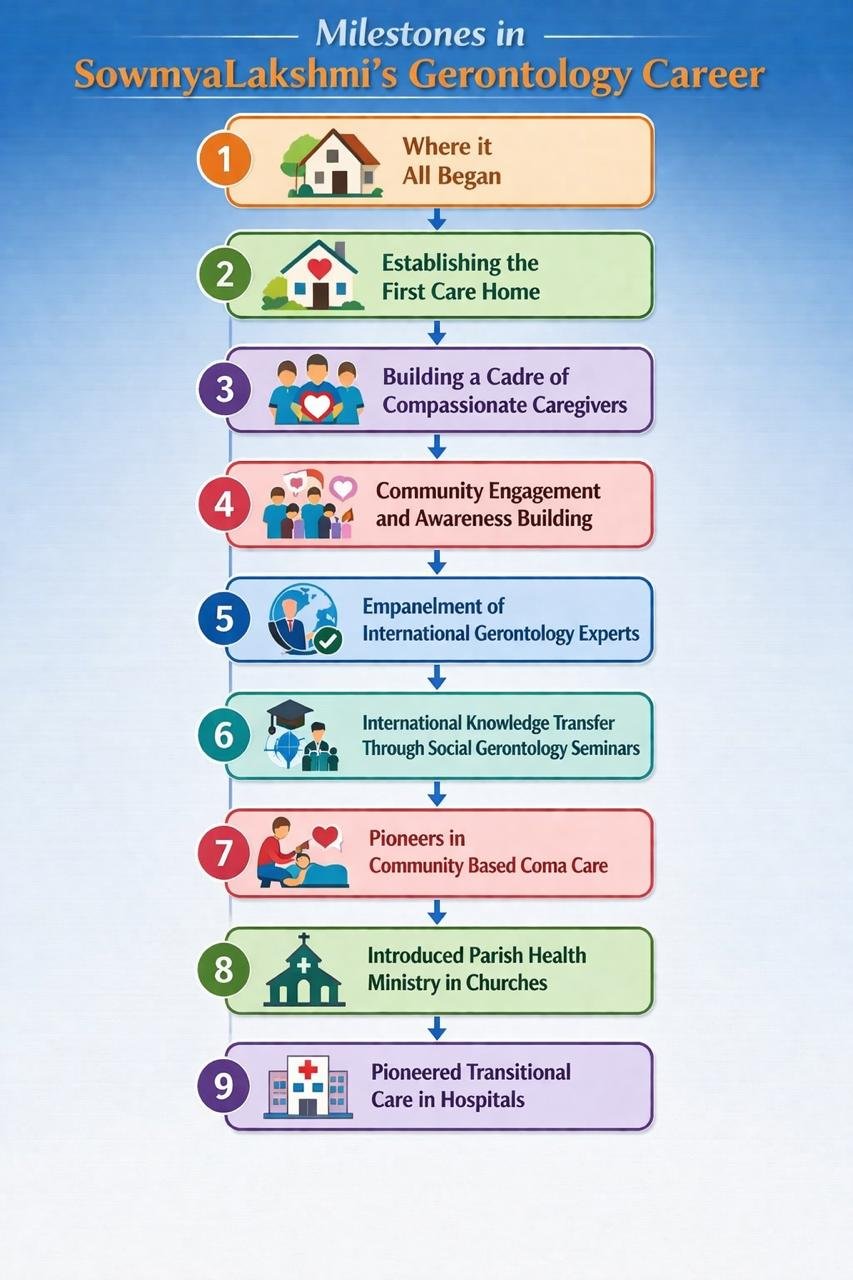
Where It All Began

The journey began not as a planned venture, but as a response to a deeply felt need.

While working in a corporate hospital setting, Roshan Jacob encountered a recurring and unsettling reality. Elderly patients, often frail, unwell, and vulnerable would arrive for consultations and minor procedures, only to spend long hours navigating the hospital environment with minimal support. Many came unaccompanied, relying on neighbours or even auto-rickshaw drivers for assistance.

What stood out was not just the clinical need, but the avoidable hardship. The physical strain of travel, the emotional discomfort of unfamiliar settings, and the quiet dignity with which these elders endured it all left a lasting impression.

This led to a simple yet transformative thought:
Could care be brought to them, instead of making them come to care?

With this idea, Roshan initiated a home-based care service, personally visiting elders, going door to door, and attending to their needs within the comfort of their homes. What began as a modest effort soon proved to be a source of immense relief and reassurance for many elderly individuals and their families.

It was at this meaningful juncture that Sowmya Lakshmi, deeply moved by the same sense of compassion and purpose, joined the initiative. What followed was not just a partnership, but the beginning of a shared journey rooted in empathy, driven by commitment, and dedicated to redefining how care for elders could be envisioned and delivered.

Establishing the First Care Home

What began as home-based care soon evolved into a deeper understanding of a much larger need.
Through their close engagement with elders and families, Sowmya Lakshmi and Roshan Jacob recognised significant gaps in elder care within the community.

It became increasingly clear that while home care offered comfort, it was not always sufficient, especially for elders with chronic, complex, or advanced conditions. Families were often under considerable strain, navigating physical, emotional, and financial challenges, with limited support systems in place. In many situations, ageing at home was no longer contributing to well-being, but quietly adding to distress for both the elder and the family.

The need for a more structured, continuous, and professionally managed care environment became evident.

Before moving forward, Sowmya Lakshmi and Roshan Jacob undertook a careful exploration of the existing elder care landscape in Bangalore in the early 2000s. They did not limit their inquiry locally. To gain a broader and more accurate understanding, they travelled across multiple states, personally visiting and studying facilities available at the time.

Their findings were both consistent and revealing. While a few “old age homes” did exist, they were largely perceived as spaces for the destitute rather than centres designed for care. Most were not equipped to support bedridden individuals. Professional caregiving systems were minimal or absent, with little integration of medical or nursing expertise, and no structured standards of care.

What became clear was not just a gap in services but the absence of a care model.

Guided by this insight, they envisioned a different kind of institution: a care home within the community that would provide continuous, dignified, and clinically supported care for elders with chronic and complex needs.

At a time when such a concept was virtually unknown in the country, and grounded in extensive first-hand exploration, they went on to establish one of the first dedicated elder care homes of its kind in India marking a pioneering step in redefining organised elder care.

Building a Cadre of Compassionate Caregivers

The third milestone centred on something fundamental to elder care: creating a pool of compassionate, skilled caregivers.

We continued to emphasise care at home, as we believed and continue to believe that a majority of elders can and should be cared for in the comfort of their own homes. Only a smaller segment requires specialised or institutional care. The decision is always shaped by multiple factors: the individual’s medical condition, functional ability, and the strength of support systems.

However, whether it is ageing at home or within an institution, one element remains non-negotiable: the presence of experienced and compassionate caregivers.

At that time, this was one of our greatest challenges.
Unlike today, there were no structured courses, no training institutes, and virtually no readily available workforce willing to take up caregiving as a profession. We were starting from scratch.

In response, we established an office in Ranne Bennur, in Haveri district of Karnataka, with a clear and determined purpose to introduce and build an entirely new caregiving workforce. This office was the hub of our activities for the entire North Karnataka.

What followed was both demanding and deeply personal.
We travelled extensively across the villages of North Karnataka, going from one community to another, meeting families face-to-face. We spoke to parents, explained the dignity and necessity of caregiving, and encouraged them to allow their sons and daughters to enrol in our training programme in Bangalore.

This was not easy.
There was hesitation, resistance, and deep-rooted stigma. Many parents were understandably reluctant to send their children, especially daughters, to a distant city, and that too with people they did not know. Building trust took time, patience, and unwavering commitment. Breaking these social barriers was anything but simple.

At the same time, we had to build the system itself.
With no existing frameworks to rely on, we developed our own caregiving curriculum. Training was rigorous and hands-on, conducted within our care facilities. Over time, we imparted not only foundational nursing skills but also specialised competencies such as tracheostomy care, Ryle’s tube and PEG feeding, stoma care, and wound management.

Equally important to us was the human dimension of care.
We consciously instilled values of empathy, dignity, and respectful behaviour, ensuring that caregiving was not seen merely as a set of tasks, but as a deeply humane responsibility.

Our sustained efforts bore fruit.
We successfully created a cadre of nearly 3,000 trained, compassionate caregivers, individuals who went on to become the backbone of both home-based and institutional elder care services.

This milestone was not just an operational success; it was deeply fulfilling. It transformed lives not only of the elders who received care, but also of the young individuals who found purpose, dignity, and livelihood in this noble profession.

Community Engagement and Awareness Building

At a time when structured conversations around ageing were almost non-existent, this initiative marked one of the first organised efforts to engage directly with the community on the realities of growing older. It was, once again, a pioneering step shifting the focus from reactive care to proactive awareness and preparedness.

Recognising that many of the challenges of old age stemmed from lack of foresight, a series of community-based workshops were designed and conducted, with a special emphasis on senior citizens. These sessions opened up much-needed dialogue on the often-unspoken perils of ageing, while also presenting a pathway towards a smoother, more secure later life.
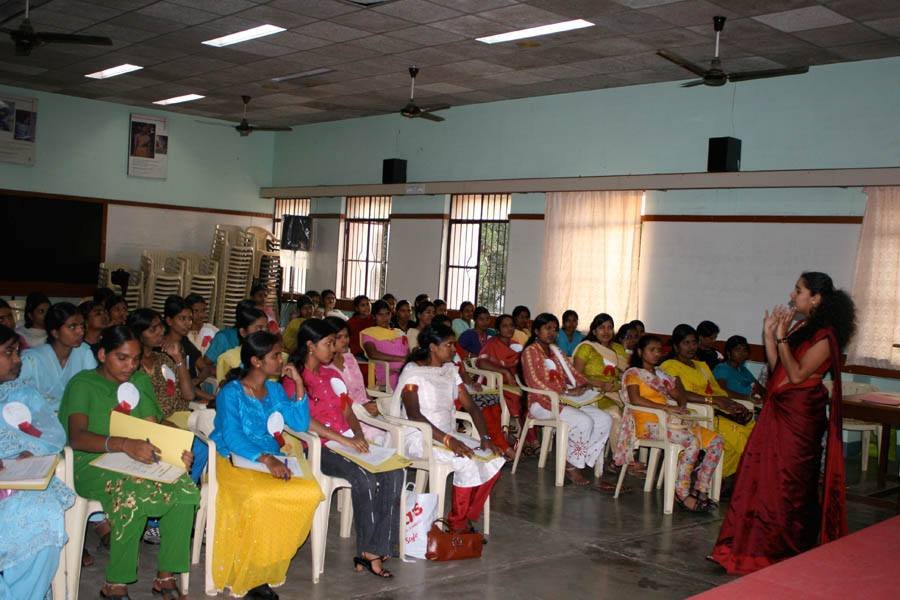
Through these workshops, elders were guided to understand the importance of self-care, timely medical consultations, and maintaining functional independence. Equal emphasis was placed on financial preparedness, balanced nutrition, emotional well-being, and the creation of dependable support systems.

Parallel to these on-ground efforts, several thought-provoking articles on ageing and elder care were published in leading Kannada and English dailies. These writings carried the message into a much wider public domain, helping to sensitise families, caregivers, and society at large. They played a crucial role in normalising conversations around ageing and reinforcing the importance of planning for later life.

What set this milestone apart was its multi-pronged approach, combining direct community engagement with public thought leadership. More importantly, it empowered seniors to take ownership of their ageing journey, shifting the narrative from passive dependence to informed and purposeful living. Ageing, thus, began to be seen not as a decline to be feared, but as a phase to be consciously planned, navigated, and lived with dignity.

Empanelment of International Gerontology Experts

At a time when the very term social gerontology was virtually unknown in India, both among the general public and within academic circles, we took a decisive and forward-looking step. Having been among the first to introduce and actively practice this discipline in the country, we recognised the need to anchor our work in global knowledge systems and established best practices.
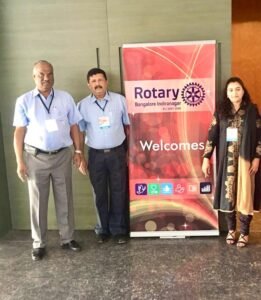
With this vision, we initiated the empanelment of an international team of distinguished gerontology experts. Our objective was not merely collaboration, but meaningful knowledge transfer from well-established systems across the world, ensuring that our approach remained both contextually relevant and globally informed.

In our formative years, we were privileged to be supported by an impressive group of academicians and practitioners in the field of gerontology. What stood out was not just their expertise, but their willingness to handhold and guide us driven by a shared commitment to a larger cause. They recognised our passion and our earnest effort to bring social gerontology into the mainstream in India, at a time when the discipline itself was still in its infancy here.

Our international associates included Paul Nash (CA, USA), Judy Parnes (NJ, USA), Amy Cotton (Maine, USA), Carolyn Gallogly (Long Island, NY, USA), Ibby Tanner (Baltimore, USA), Robyn Flipse (NJ, USA), and Vanessa Burholt (Ireland). Their guidance and encouragement played a significant role in shaping our early direction and strengthening our foundation.

International Knowledge Transfer Through Social Gerontology Seminars

At a time when Social Gerontology was virtually unknown within the nursing ecosystem in India, advantAGE Seniors, through its education wing iSGR, undertook a bold and pioneering initiative to introduce this discipline to the nursing fraternity.

Between 2012 and 2014, iSGR successfully organised eight international seminars for nurses, nursing students, and nursing faculty, creating one of the earliest structured platforms for gerontology-focused learning in clinical and academic nursing spaces.

This ambitious initiative was conceived, coordinated, and executed single-handedly by Sowmya Lakshmi and Roshan Jacob. Bringing together Eight international experts from the United States and Ireland as resource persons was no easy task at the time, involving significant effort in outreach, coordination, and logistics, especially in an era when such global academic exchanges were far less accessible.

These seminars were not mere awareness sessions, but serious academic engagements designed to position Social Gerontology alongside established nursing disciplines. The objective was to ignite interest, build foundational understanding, and encourage integration of gerontological perspectives into nursing care.

The response was overwhelming. All eight seminars were oversubscribed and a resounding success, drawing enthusiastic participation and validation from the nursing community. More importantly, they helped plant the early seeds of gerontology within nursing education and practice in India.

This milestone stands as a pioneering effort in international knowledge transfer, driven by vision, commitment, and the determination of two individuals to bring global expertise to Indian shores.

Pioneers in community based coma care

As practicing social gerontologists, they witnessed firsthand the profound helplessness experienced by families of patients in coma. This deeply moved Sowmya Lakshmi and Roshan Jacob, prompting them to initiate a structured approach to coma care—one that not only ensured the best possible care for patients but also consciously addressed the intense emotional distress faced by families.

In the early 2000s, coma management in India was almost entirely confined to intensive care units. Long-term ICU care placed an enormous psychological and financial burden on families, often with little guidance on continuity of care beyond the hospital setting. Recognising this gap, Sowmya Lakshmi and Roshan Jacob pioneered a model of structured coma care outside hospitals, bringing dignity, continuity, and compassion into the care process.

Their work received recognition from The Times of India, which identified them as coma care specialists, an acknowledgment of their role in shaping an alternative care pathway at a time when such thinking was virtually non-existent in the country.

Through this initiative, AdvantAGE Seniors in Bengaluru emerged as a forerunner in community-oriented coma care in India. This effort marked a significant shift from an ICU-only model to a more holistic, structured, and socially grounded approach to coma rehabilitation.

This became a defining milestone in their journey, where insight, compassion, and professional commitment came together to redefine coma care.

Parish Health Ministry (PHM)

Another significant initiative undertaken by Sowmya Lakshmi and Roshan Jacob was the introduction of the Parish Health Ministry (PHM) to churches. This concept was first introduced to them by Ibby Tanner from John Hopkins, Baltimore.

PHM was already a well-established model in many Western churches, where members of the medical fraternity voluntarily offered their services for the benefit of fellow parishioners and the larger community. Recognising its immense potential, especially in supporting the infirm and ageing population, Sowmya Lakshmi and Roshan Jacob took pioneering steps to introduce and adapt this model within Indian church communities.

They envisioned PHM not merely as a healthcare support system, but as a compassionate, community-driven outreach that could bridge gaps in elder care through voluntary service.

While the initiative initially generated considerable interest among several churches, it unfortunately did not sustain momentum or translate into long-term implementation.

Pioneering Transitional Care: Bridging the Gap Between Hospital and Home

Transitional care is another area where Sowmya Lakshmi and Roshan Jacob undertook pioneering work, recognising a critical gap in the continuum of care for patients, especially the elderly being discharged from hospitals.

This insight was strongly reinforced by their international associate, Amy Cotton from Maine, who emphasised the importance of structured transitional care. While hospitals focus on treatment, the phase immediately after discharge often remains neglected, leaving patients and families unprepared to manage care in a home environment.

Traditionally, nurses have played a key role in coordinating discharges. However, with the advent of corporate hospitals, this responsibility is increasingly handled by designated ward coordinators or administrative personnel. Despite these systems, they observed that meaningful transitional care, particularly patient and family education, was largely inadequate.

A recurring concern voiced by families was: “No one told us.”
This lack of guidance often leads to confusion and improper care practices, and ultimately, avoidable hospital readmissions.

As social gerontology practitioners, they identified this as a serious lacuna. Through their structured transitional care sessions, they began sensitising hospital staff especially nurses and discharge coordinators on the importance of effectively “handholding” patients and families during the discharge process.

Their approach emphasised that care does not end with the completion of medical treatment. Instead, the responsibility of healthcare providers extends beyond discharge, ensuring that patients and caregivers are adequately prepared and informed to continue care at home.

This initiative has played a significant role in improving continuity of care, reducing preventable complications, and enhancing the overall quality of life for elderly patients.