

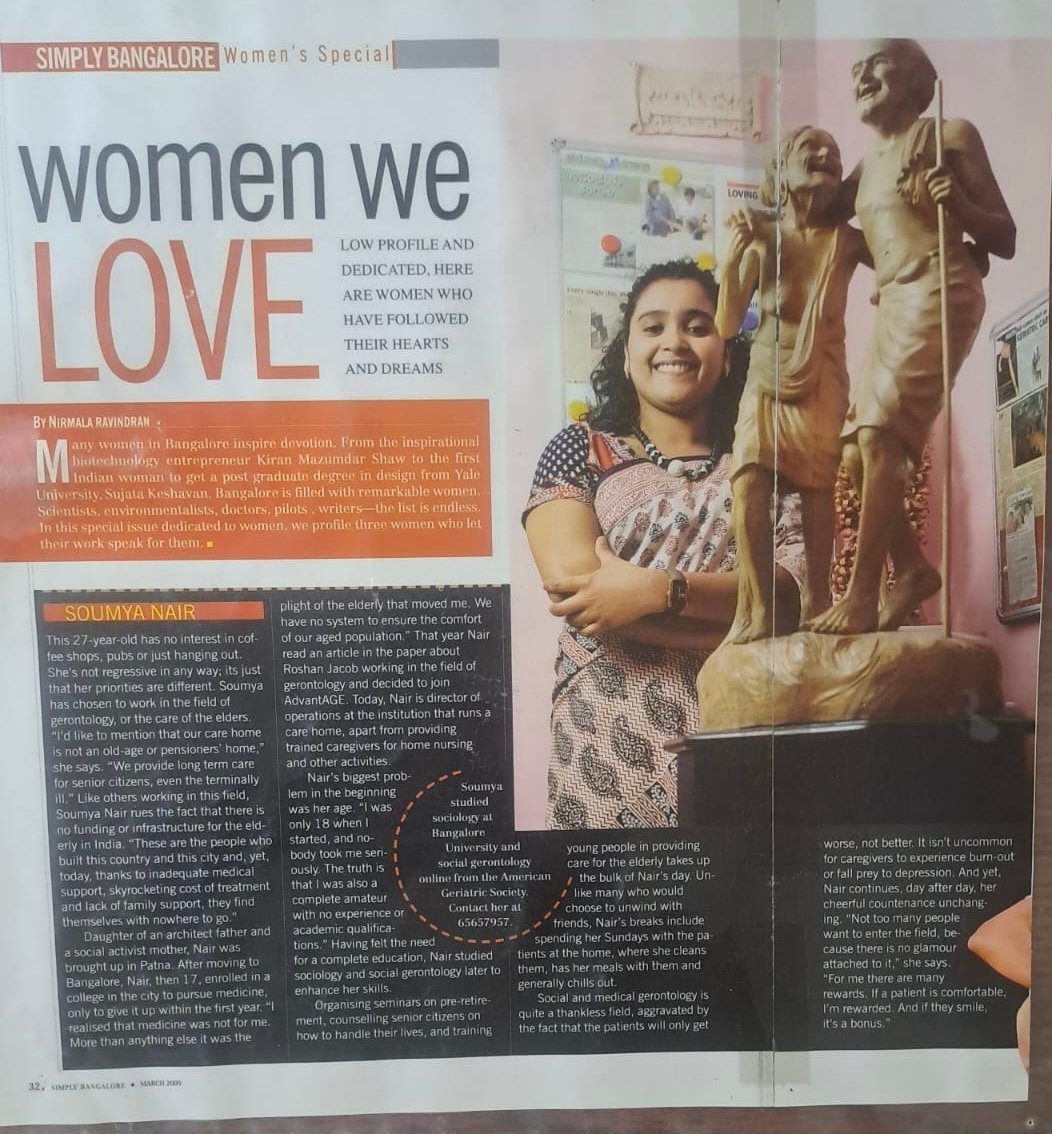
 In its “Women We Love” series, India Today’s Simply Bangalore spotlighted Sowmya Lakshmi Ottur as a quiet yet pioneering force in Indian elder care. The profile, titled Low Profile and Dedicated, framed her as an inspiration to young women who choose to follow their hearts and dreams rather than conventional paths.
The article emphasised her groundbreaking role as India’s first social gerontology practitioner, a discipline that blends clinical insight with social advocacy to support the infirm elderly and their families. Sowmya’s work was portrayed not as a high-visibility crusade but as a deeply personal mission rooted in empathy, counselling, and dignity. By offering structured care and guidance to families navigating ageing and infirmity, she carved out a new professional space in India’s healthcare landscape.
The narrative highlighted her dedication and humility, contrasting her low-profile approach with the transformative impact of her work. Rather than seeking recognition, Sowmya’s focus remained on building systems of care that honour the elderly, ensuring that their final years are marked by dignity rather than neglect.
Through this lens, Simply Bangalore positioned her as a role model for women who aspire to create change in unconventional sectors. The feature underscored how her journey embodies courage, innovation, and compassion, qualities that resonate far beyond elder care, offering a blueprint for socially conscious professional practice in India.



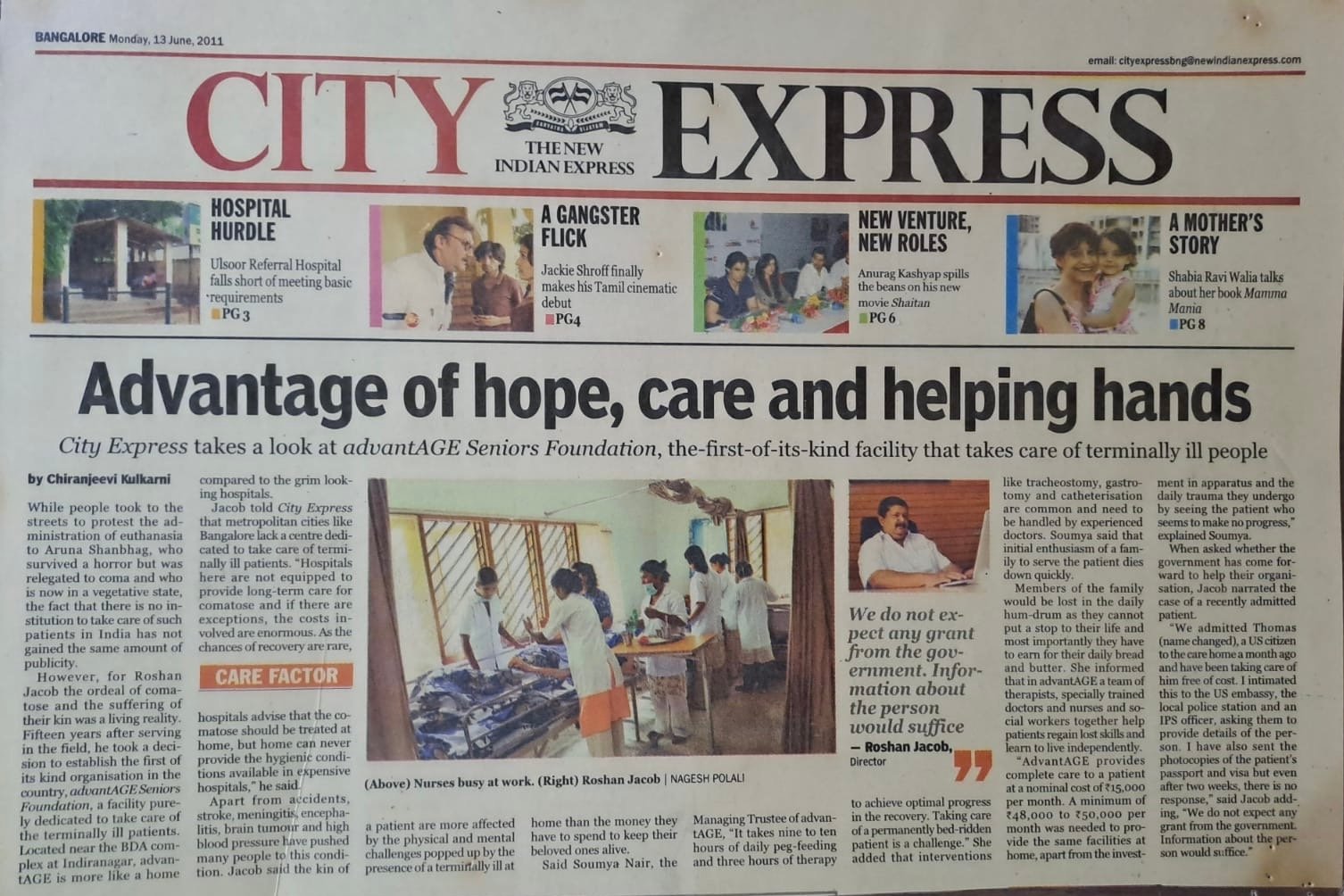 The Indian Express featured AdvantAGE Seniors in a compelling story titled “AdvantAGE of Hope, Care and Helping Hands,” bringing national attention to the pioneering work of Roshan Jacob and Sowmya Lakshmi. The article highlighted their groundbreaking initiative in establishing India’s first structured coma care facility, an innovative model designed not only to support terminally ill patients but also to ease the emotional and psychological burden on their families.
What made the story particularly significant was its framing of AdvantAGE Seniors as a socially innovative model of care. It challenged the long-held assumption that dignity in elder care is constrained by profitability, instead presenting a humane, sustainable approach that integrates medical, emotional, and social support. By positioning coma care beyond a purely clinical intervention, the article underscored the importance of holistic caregiving in addressing the complex realities of aging and end-of-life care.
The feature profiled AdvantAGE Seniors as a first-of-its-kind institution in India, with clearly defined leadership roles. Roshan Jacob was presented as Founder and social gerontologist, recognised for bridging traditional values with modern care practices, while Sowmya Lakshmi, as Executive Director, was acknowledged for her sustained role in shaping programs and operations. Together, their vision and execution were credited with transforming elder care into a more structured and recognised sector in the country.
Beyond coma care, the organisation’s broader contributions were also highlighted, including assisted living, respite care, domiciliary services, caregiver training, and advocacy for elder rights. At its core, the story reinforced AdvantAGE Seniors’ unwavering commitment to dignity-driven care, ensuring that both patients and their families receive not just support, but compassion and respect during some of life’s most challenging moments.
The coverage by The Indian Express, first published in May 2012 and followed up with a feature in November 2016, reflects the evolving narrative of AdvantAGE Seniors within India’s elder care landscape. While the earlier report highlighted pioneering efforts in structured coma care, the 2016 feature broadened the lens to address pressing concerns such as family neglect and the urgent need for organised care homes in urban India. It profiled Roshan Jacob and Sowmya Lakshmi as key leaders driving this change, positioning AdvantAGE Seniors as a meaningful response to the country’s growing elder care challenges. This progression in storytelling marked a significant shift, from a focus on specialised care to a larger advocacy for systemic, dignity-driven elder care, firmly situating AdvantAGE Seniors within India’s rapidly changing social fabric.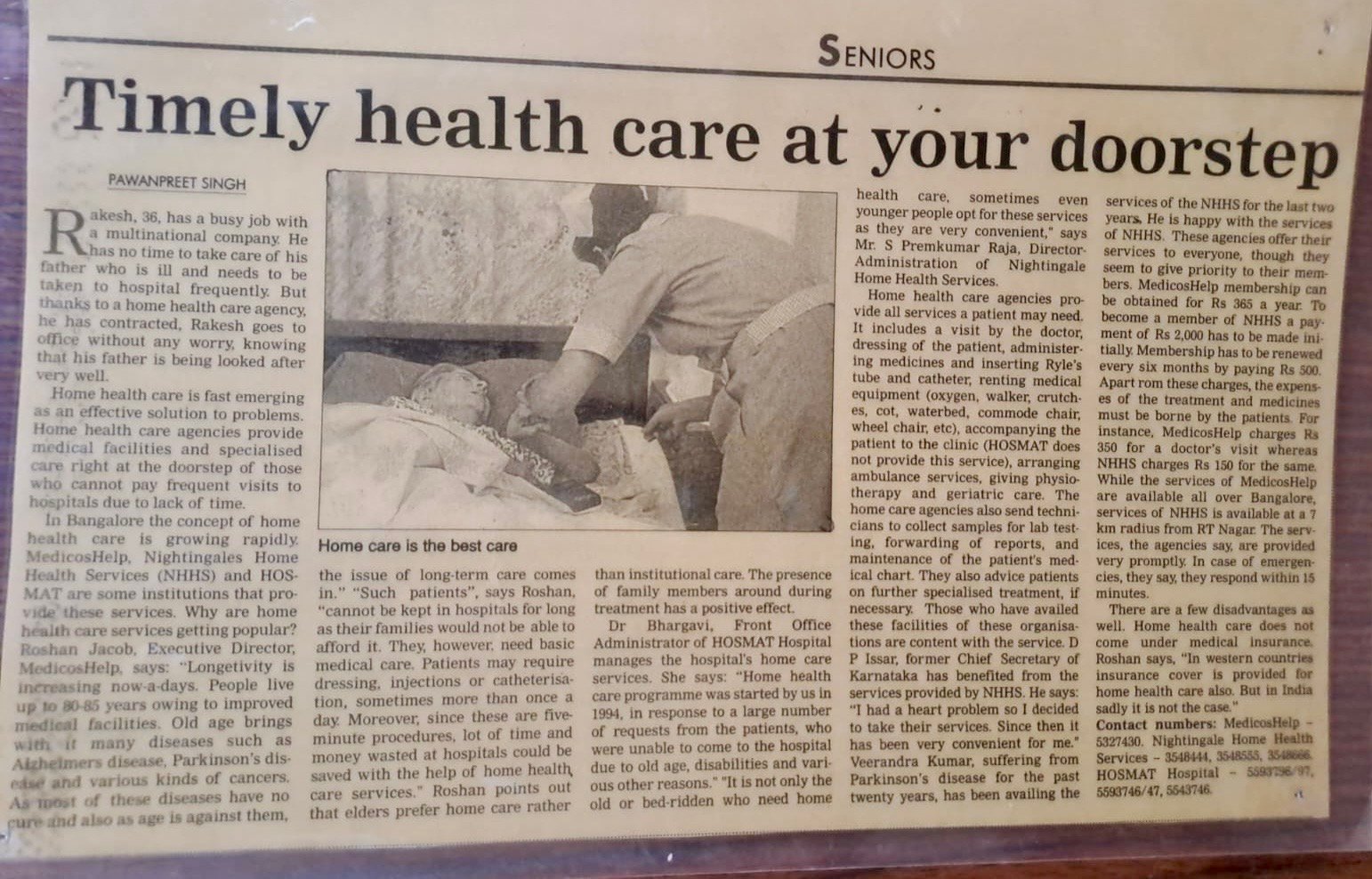
‘Timely Health Care At Your Doorstep” is another article the New Indian Express published about us. This coverage is about how the home health services of advantAGE Seniors help the aged stay at home and receive quality care in their later years.

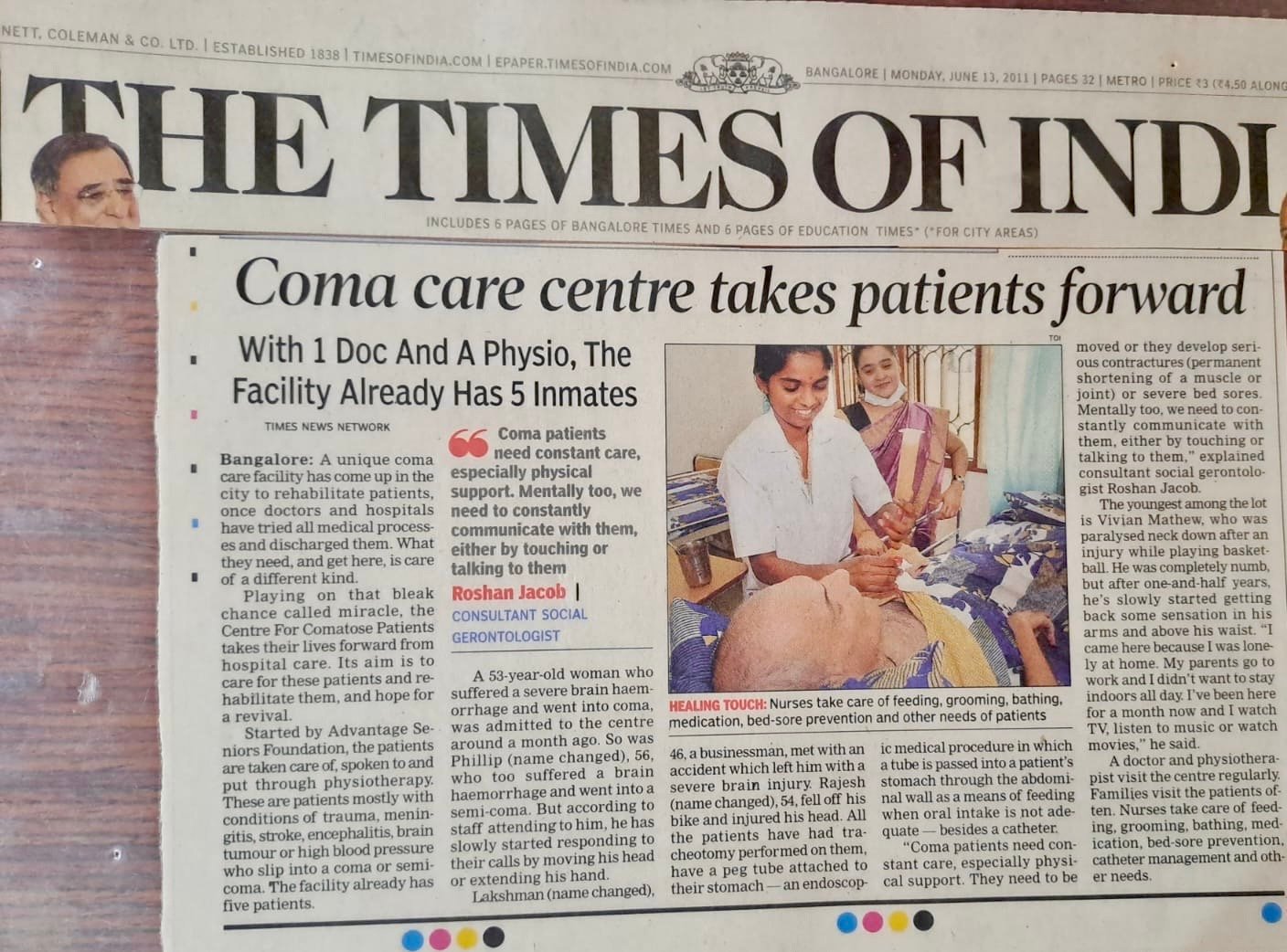 The Times of India article dated June 13, 2011, brought national attention to the launch of Advantage Seniors’ pioneering coma care centre in Bengaluru, recognised as India’s first structured facility dedicated to rehabilitating comatose patients after hospital discharge. Conceived by social gerontology practitioners Roshan Jacob and Sowmya Lakshmi and established under the Advantage Seniors Foundation, the Centre for Comatose Patients was envisioned as a dignity-driven extension of medical care. It offered not just physiotherapy and clinical support, but also communication, stimulation, and a sustained sense of hope for revival in patients often written off after acute treatment.
The report highlighted how the initiative sought to address a critical gap in the healthcare continuum. Hospitals, once they exhaust active medical interventions, typically discharge such patients, leaving families to cope without guidance or structured support. Recognising this unmet need, Roshan Jacob and Sowmya Lakshmi designed a model that would bridge hospital care and home caregiving, one that emphasised ongoing engagement with patients through therapeutic interventions, emotional connection, and consistent care routines aimed at preserving dignity and enhancing the possibility of recovery.
Importantly, the article framed this effort not merely as a service, but as a shift in narrative around coma care. It underscored what it described as a “miracle chance”, an approach that acknowledged the limits of medicine while refusing to reduce patients to passive existence. Through their vision, Roshan Jacob and Sowmya Lakshmi redefined coma care as a continuum of dignity, hope, and possibility, reshaping how long-term care for such patients could be perceived and delivered in India.


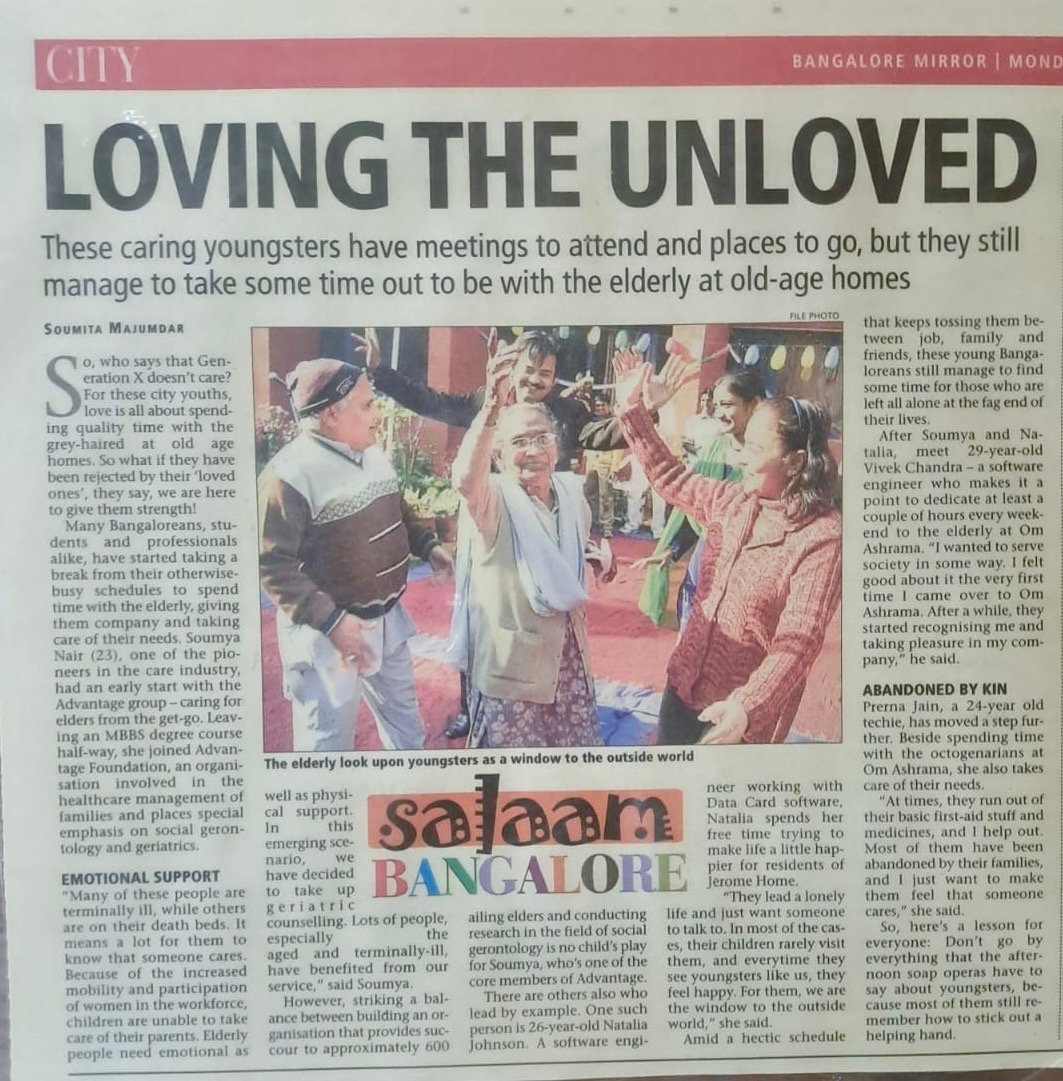 The Bangalore Mirror article titled “Loving the Unloved” profiled Sowmya Lakshmi, co-founder of advantAGE Seniors, highlighting her pioneering role in elder care and her deep commitment to serving the elderly. It portrayed her as one of the few individuals in India who chose caregiving as a vocation, driven not by profit but by empathy, dignity, and compassion. The title itself reflected the essence of her work, caring for seniors who are often overlooked or marginalised while framing elder care as both a social responsibility and a deeply personal calling.
The piece positioned Sowmya as a trailblazer in India’s evolving care ecosystem, underscoring her contribution to building structured elder care services in Bengaluru. Written in a human-interest style, the article blended personal anecdotes with a broader advocacy for improved elder care systems, bringing attention to the emotional depth, patience, and commitment required in caregiving. It ultimately highlighted not just her journey, but also the larger need for compassionate and dignified approaches to aging in society.

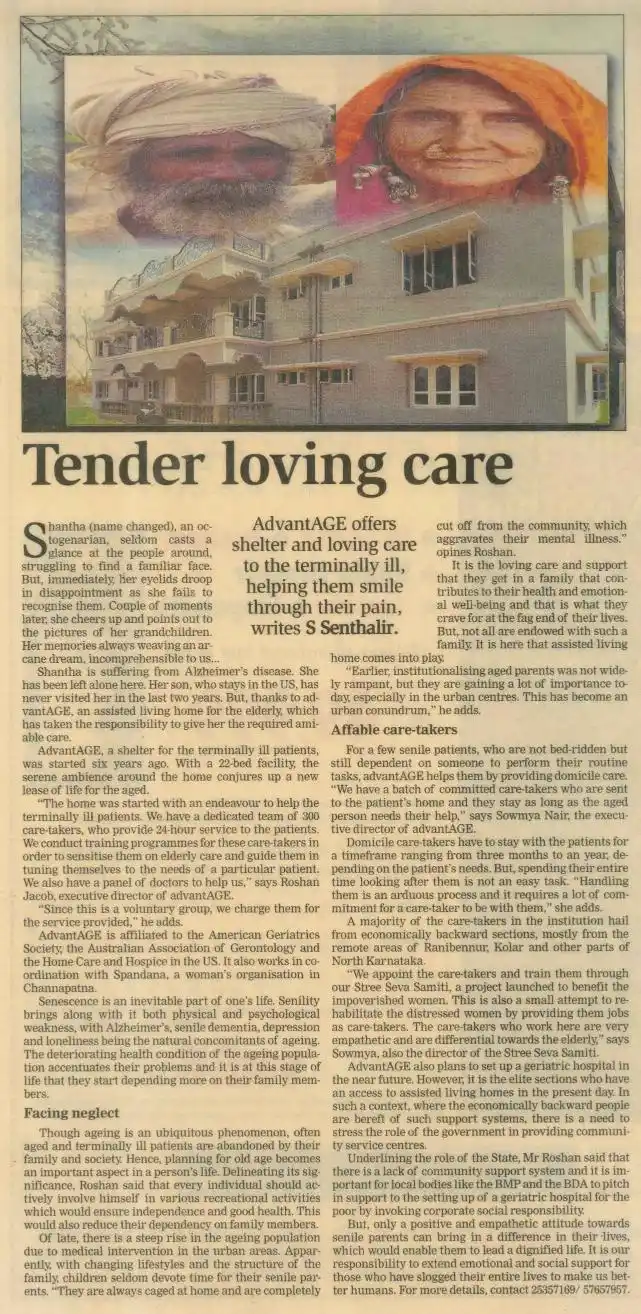 The article “Tender Loving Care” highlights the rising need for professional caregiving in India, particularly for the elderly and those with chronic or terminal conditions. It features the work of Sowmya Nair and Roshan Jacob, who are building a trained caregiving workforce that addresses both the shortage of skilled carers and the need for dignified employment.
The article places the advantAGE Seniors initiative within a broader movement to professionalize caregiving in India. By establishing structured care models, including facilities for terminally ill patients, their work bridges the gap between traditional family-based care and institutional support systems.
Overall, the article underscores how such efforts go beyond a single facility, demonstrating how organised, compassionate caregiving can transform end-of-life care, making it more humane, less isolating, and better aligned with the evolving needs of Indian society.
This article explores the difficult questions surrounding life, death, and medical decisions at the end of life.
It highlights situations where patients are in critical or unconscious states and families must decide whether to continue life-support treatment. The discussion focuses on dignity, suffering, and the emotional burden faced by families.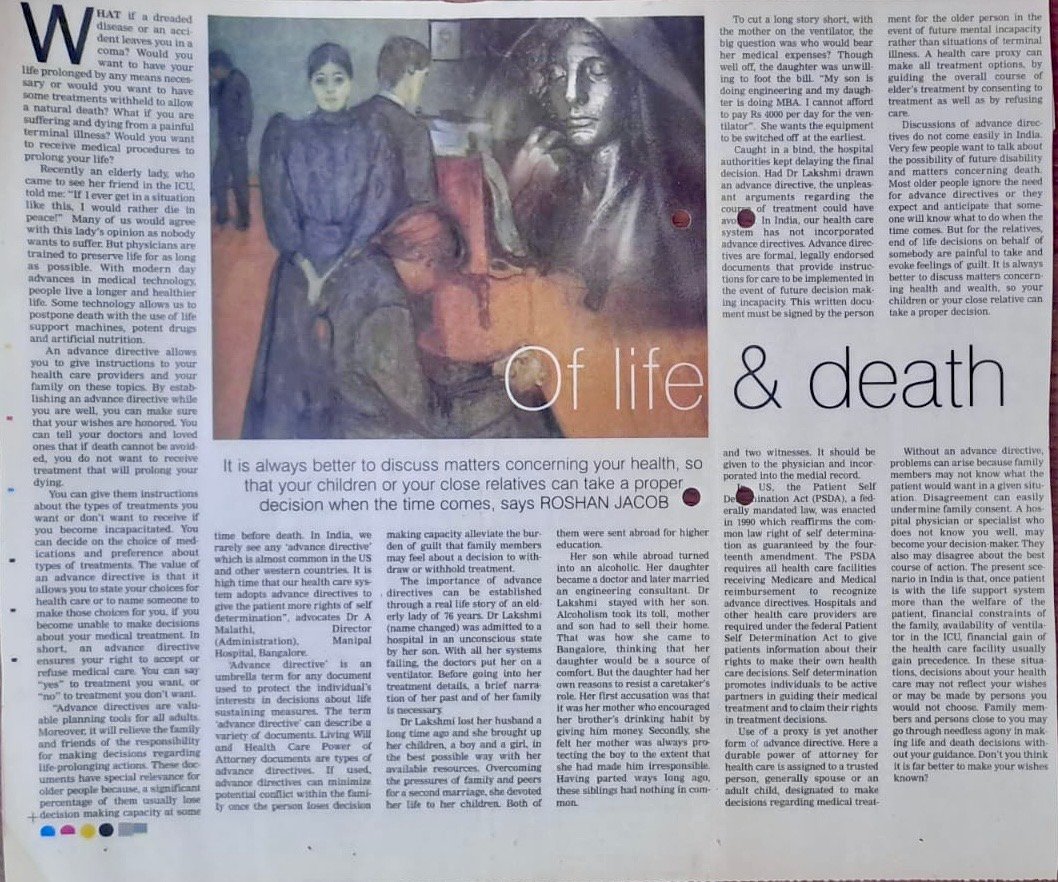
It explains the importance of planning ahead through tools like advance medical directives, which allow individuals to express their wishes about treatment before they lose decision-making ability.
This helps families avoid confusion and guilt during critical moments. It also ensures that the patient’s wishes are respected.
Overall, the article emphasizes that conversations about death should not be avoided. Talking openly helps families make informed and compassionate decisions. It encourages individuals to take control of their future healthcare choices.
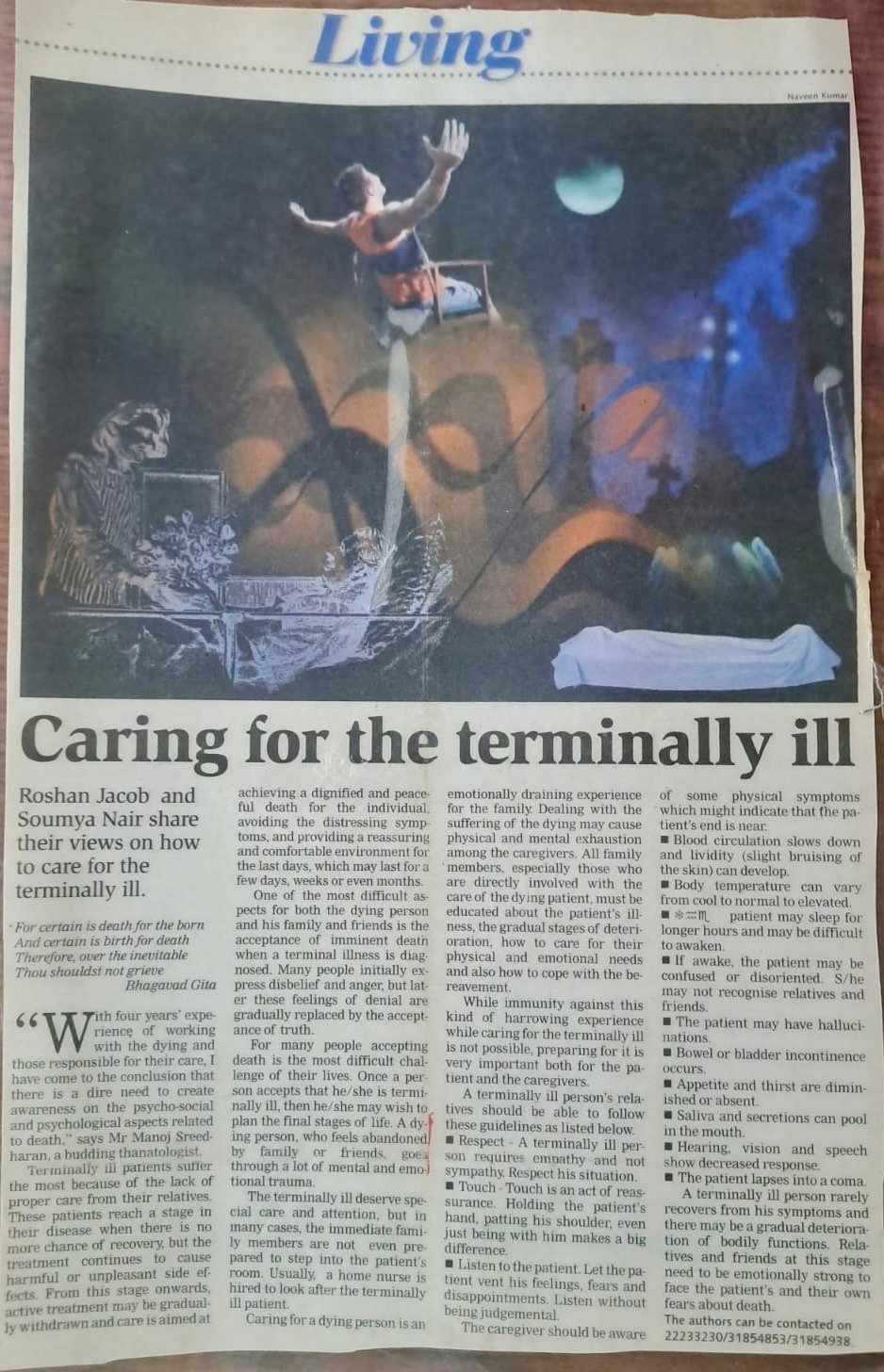 This article focuses on how to provide proper care to patients who are terminally ill.
It explains that such patients need not only medical treatment but also emotional and psychological support.
Caregivers and family members play a very important role during this stage.
It highlights that many patients suffer due to lack of awareness and proper guidance. Families often feel helpless and unprepared to handle the situation. Proper training and support systems can improve the quality of care significantly.
The article also stresses the importance of dignity and comfort in the final stages of life. Simple acts like listening, touch, and emotional presence make a big difference. The goal is to ensure a peaceful and respectful end-of-life experience.
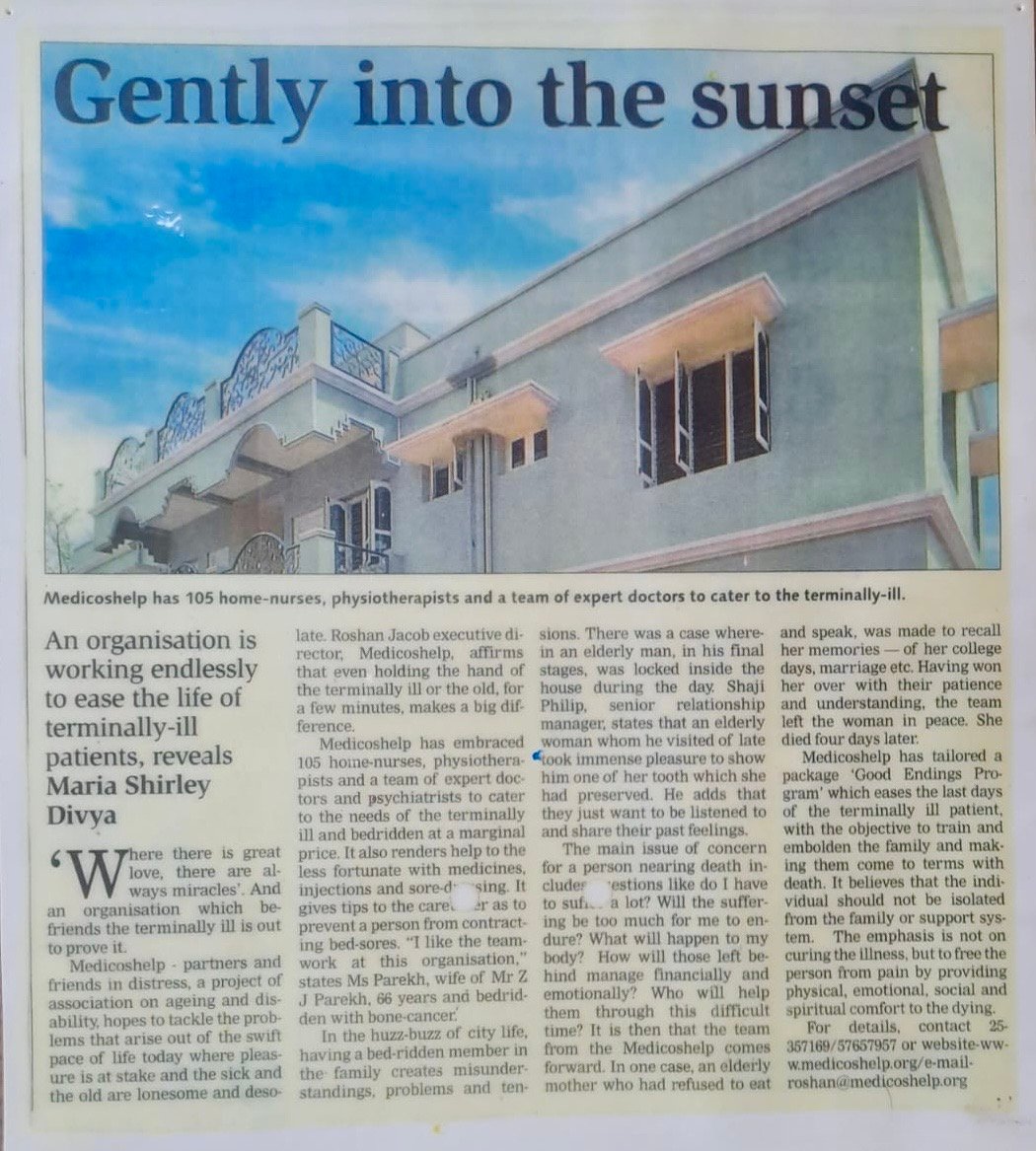 This article talks about providing compassionate care to terminally ill patients in their final days. It introduces services that focus on reducing pain and improving comfort rather than aggressive treatment. The aim is to help patients live their last days peacefully.
It highlights how trained caregivers and medical professionals support both patients and families. They provide physical care, emotional support, and guidance during difficult times. Even small gestures like holding hands or listening can bring comfort.
The article emphasizes that end-of-life care should not isolate patients. Instead, it should bring them closer to their loved ones. The focus is on dignity, peace, and emotional well-being.
This article highlights how home healthcare services are becoming an effective solution for patients who cannot frequently visit hospitals.
It explains that busy lifestyles and increasing health issues, especially among the elderly, make it difficult for families to provide constant care.
Home care services help bridge this gap by bringing medical support directly to the patient’s home.
The article describes the wide range of services provided, including doctor visits, nursing care, physiotherapy, medication management, and assistance with daily activities.
It also mentions support services like diagnostic tests, medical equipment, and emergency assistance.
These services ensure that patients receive continuous and professional care without leaving their homes.
Overall, the article emphasizes convenience, comfort, and cost-effectiveness of home healthcare.
Patients feel more relaxed in their own environment, and families experience less stress.
It presents home healthcare as a growing and reliable solution for modern healthcare needs, especially for the elderly and long-term patients.
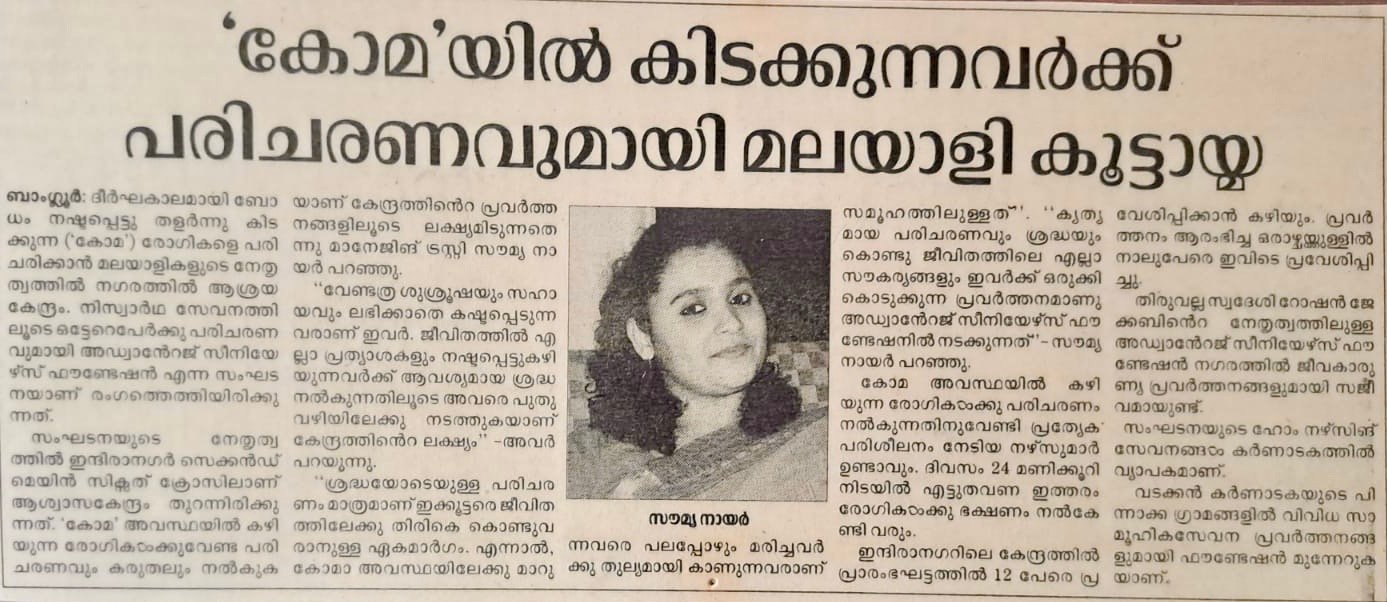 This article focuses on the need for specialised care for coma and critically ill patients.
It explains how families often struggle to manage such conditions at home due to lack of knowledge, resources, and emotional support.
The article highlights the importance of structured care systems that provide continuous medical attention and rehabilitation.
It also emphasizes the role of communication and human connection in patient recovery.
Even when patients are unresponsive, touch, care, and interaction play a crucial role.
The article promotes a more compassionate and professional approach to long-term and coma care.
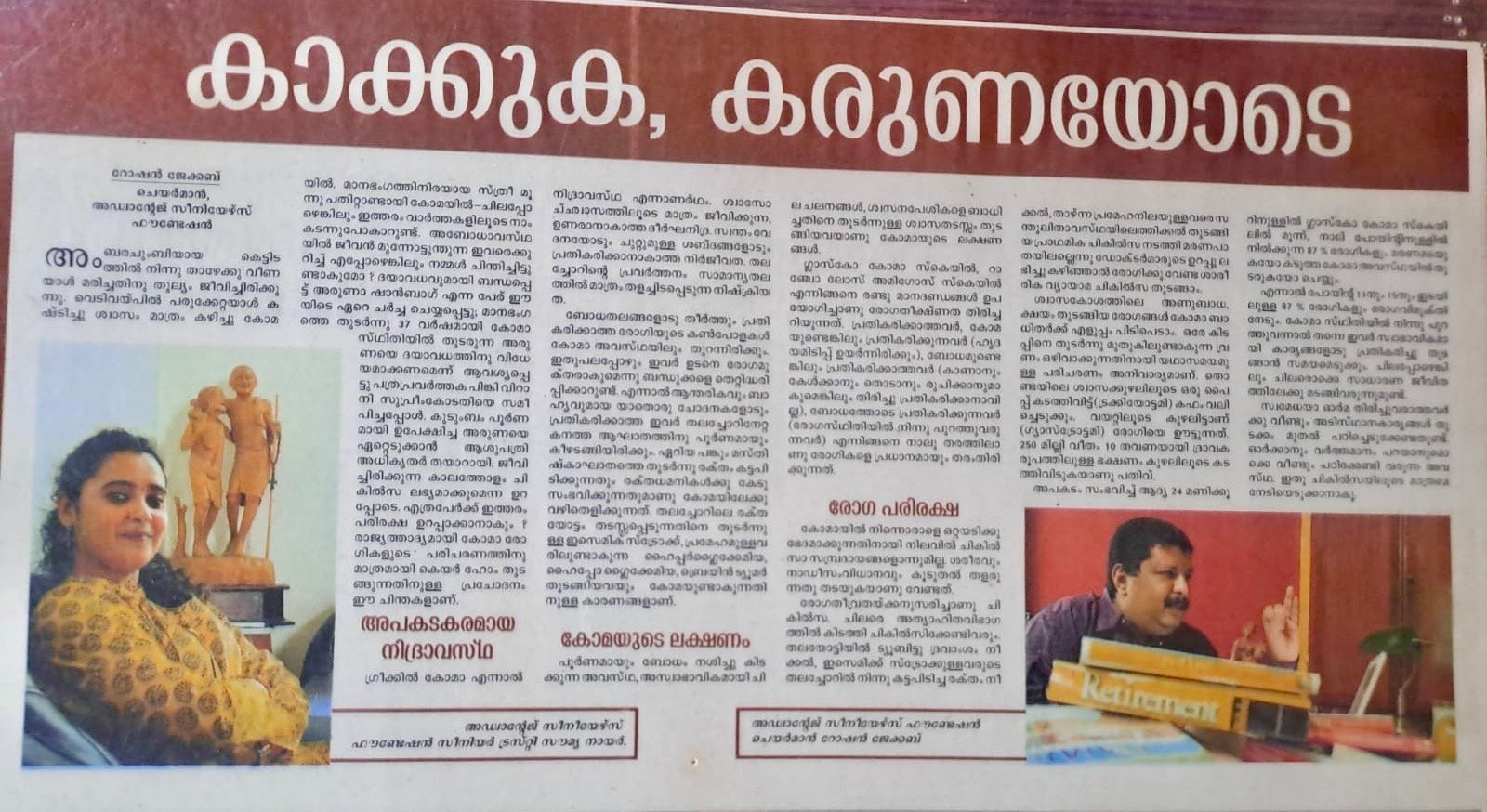 This article highlights organized elder care services and how they support both patients and families.
It explains the challenges faced by elderly and bedridden patients, especially when families are unable to provide full-time care.
Professional caregiving services help ensure proper medical and daily support.
It also focuses on improving quality of life through trained caregivers, hygiene, and regular monitoring. The article stresses dignity, comfort, and emotional well-being of patients.
It encourages society to adopt structured elder care solutions as a necessary support system.
This article highlights the daily struggles faced by elderly individuals who require long-term care.
It shares real-life situations where families struggle to manage the physical, emotional, and financial burden of caregiving.
Many elderly people live with constant uncertainty and dependence.
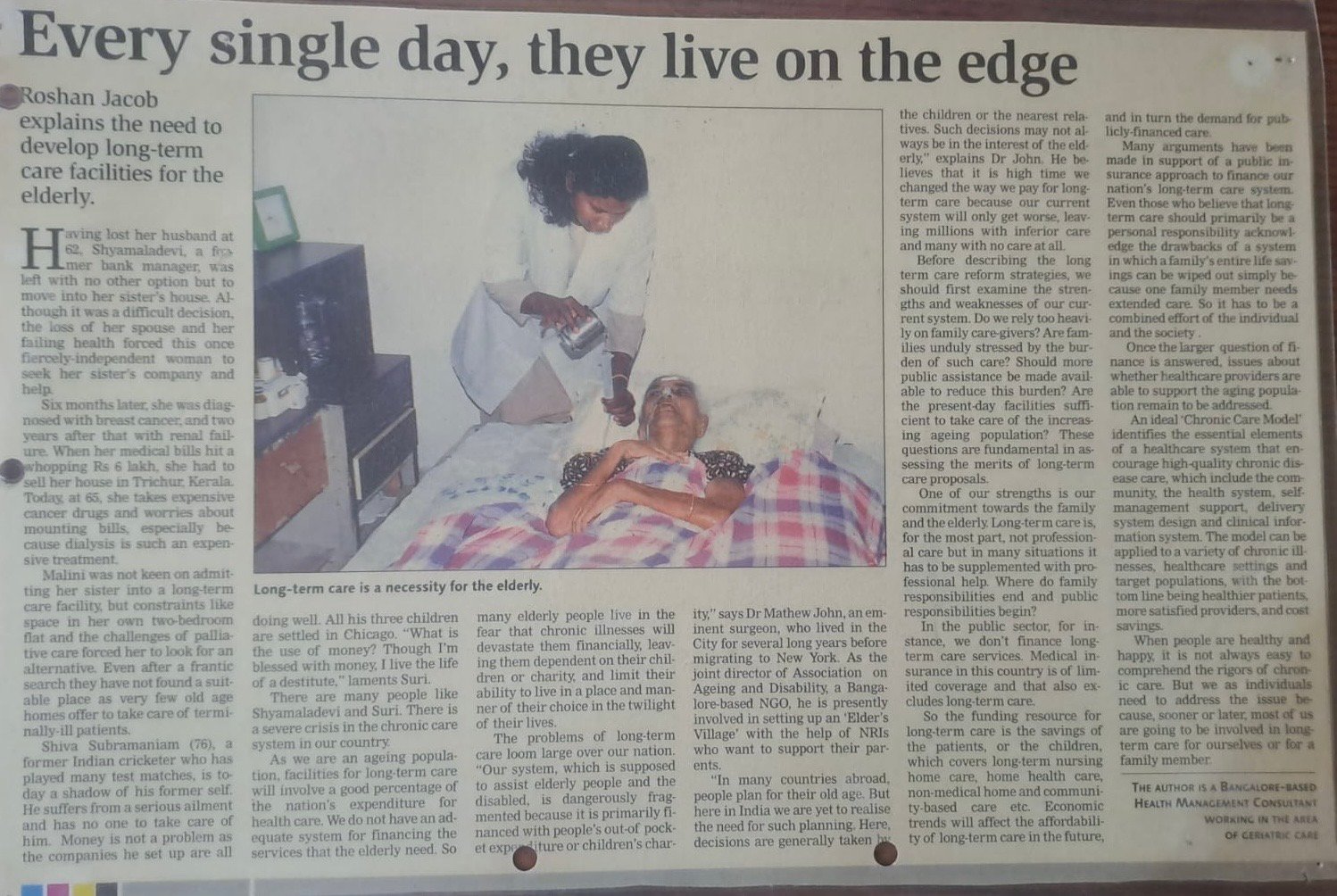 It explains that India lacks proper long-term care systems for the elderly.
Most responsibility falls on families, who are often unprepared.
This creates stress and affects both caregivers and patients.
The article calls for better support systems and awareness about elder care.
It emphasizes the need for structured care facilities and professional help.
Ensuring dignity and quality of life for the elderly is essential.